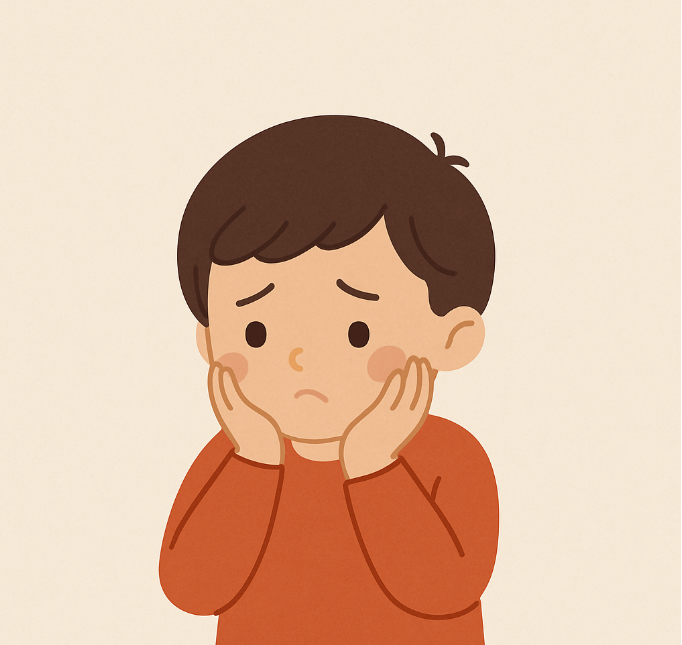
Should I Be Worried About My Child’s Shyness?
As a parent, it’s natural to wonder whether a child’s quietness or hesitation in social situations is something to worry about. Shyness typically refers to discomfort in new or unfamiliar social settings or fear of being the center of attention. While many children go through temporary phases of shyness, for some it can persist and shape emotional, social, and academic experiences.
This article explores what research says about childhood shyness—how common it is, when it may pose risks, and how adults can support shy children in healthy, developmentally appropriate ways.
Understanding Shyness: State vs. Temperamental
Research distinguishes between two main forms of shyness, which differ in duration, intensity, and impact on daily functioning.
- State shyness is situational and temporary, often appearing in new environments or with unfamiliar people.
- Temperamental (trait) shyness is more stable over time and appears across many settings, reflecting a child’s underlying temperament.
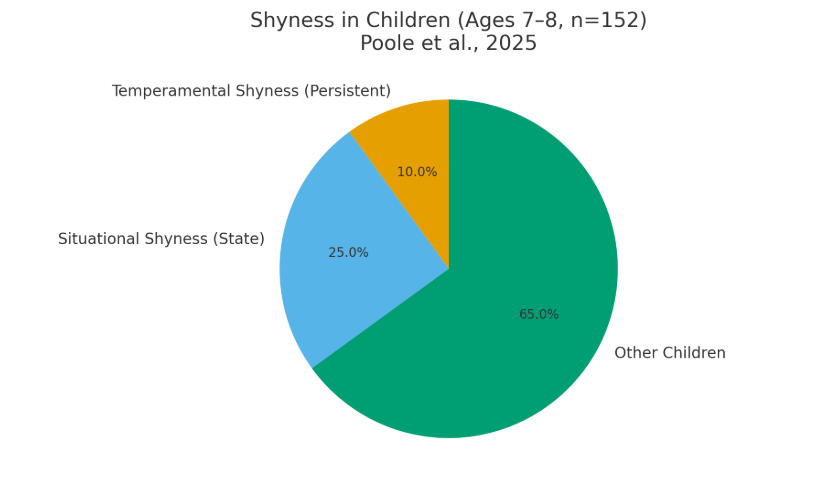
In a study of children aged 7–8, about 10% showed persistent behavioral, emotional, and physiological signs of shyness, while roughly 25% showed only temporary emotional reactivity under stress.
How Common Is Shyness Among Children and Adolescents?
Shyness is far more common than many parents realize. Large-scale studies consistently show that a significant portion of children and adolescents identify as shy.
- Among early adolescents: about 21% self-identify as shy, while 11% are labeled extremely shy by peers.
- Among teenagers: nearly 47% self-report shyness, while 62% are perceived as shy by parents in unfamiliar settings.
These differences highlight that shyness is influenced by both internal experience and external perception.
Risks and Long-Term Trajectories Linked to Shyness
For most children, shyness is harmless. However, persistent or intense shyness may increase long-term risk.
- 42% of persistently shy children developed anxiety in adolescence, compared with 11% of peers.
- About half of temperamentally shy children later developed an anxiety disorder.
Hidden Shyness: When Adults Miss the Signs
Some children experience significant internal anxiety without obvious outward behaviors.
- Quiet, compliant children may be overlooked despite high internal distress.
Gender Differences in Perceptions of Shyness
Girls report shyness more often than boys, though caregivers do not consistently rate them as shyer.
Why Shyness Isn’t Always a Bad Thing
- Many shy children develop strong empathy and emotional awareness.
- In some cultures, restraint and quietness are valued traits.
Signs to Watch: When Shyness May Need Attention
- Persistence across time and settings
- Avoidance of school or social activities
- Interference with daily functioning
Practical Strategies to Help a Shy Child Thrive
- Observe patterns: Notice triggers and contexts.
- Validate feelings: Acknowledge anxiety without pressure.
- Offer low-pressure social exposure: Small, structured steps build confidence.
Final Thoughts
Shyness is common and often adaptive. With understanding and gentle support, shy children can grow into confident, emotionally intelligent adults.
References
Poole, K., & Schmidt, L. A. (2025). Latent profiles of children’s shyness.
Poole, K., & Pérez-Edgar, K. (2025). Developmental outcomes of temperamentally shy children.
Schmidt, L. A., et al. (2009). Longitudinal links between shyness and anxiety.
Burstein, M., et al. (2011). Shyness in adolescence.