How to Encourage Healthy Sleep Habits in Children
Establishing healthy sleep habits is vital for a child’s physical health, emotional development, learning capacity, and overall well-being. Poor sleep in childhood is linked to behavioral problems, lower academic performance, and long-term health issues. Here’s a research-supported guide to help your child develop strong, lasting sleep habits.
Set a Consistent Bedtime Routine
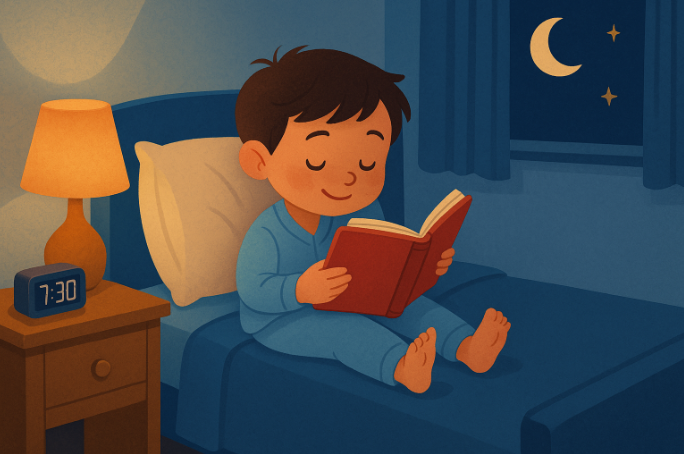
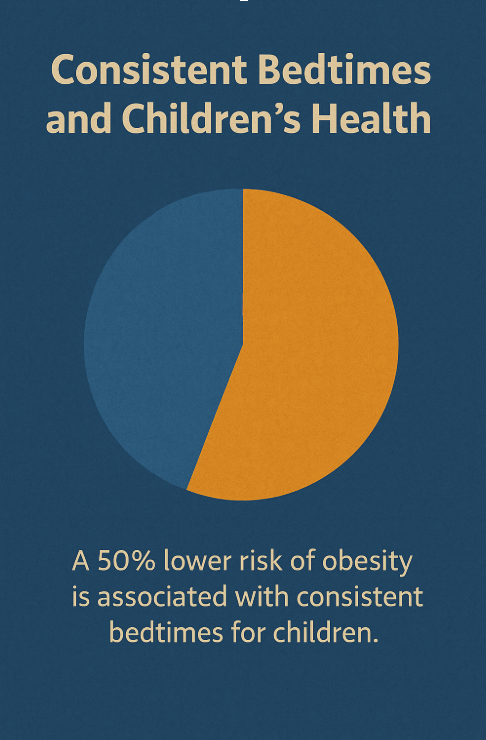
Children thrive on routine. Studies show that consistent sleep and wake times are associated with better mood, improved behavior, and longer sleep durations in children (Mindell et al., 2015). A regular bedtime routine—like bath, brushing teeth, and reading—signals to the brain that it’s time to wind down (CDC, 2022).
Create a Sleep-Friendly Environment
A quiet, dark, and cool room helps signal the brain to produce melatonin, the sleep hormone. The National Sleep Foundation recommends blackout curtains, white noise machines, and limiting visual distractions in children’s rooms (NSF, 2021). Studies also show that children fall asleep faster and sleep longer in optimized environments (Blunden & Galland, 2014).
Limit Screen Time Before Bed
Blue light from phones, tablets, and TVs suppresses melatonin and delays sleep onset. The American Academy of Pediatrics recommends no screens at least 1 hour before bedtime (AAP, 2022). One study found that children using screens within 30 minutes of sleep took 23% longer to fall asleep (Carter et al., 2016).
Encourage Physical Activity During the Day
Physical activity improves sleep quality and reduces the time it takes to fall asleep. The CDC recommends at least 60 minutes of moderate to vigorous physical activity daily for children (CDC, 2022). However, avoid intense exercise close to bedtime, which can be too stimulating.
Avoid Caffeine and Heavy Meals in the Evening
Caffeine (even in soda or chocolate) can interfere with sleep by increasing alertness and delaying melatonin release. Likewise, heavy meals near bedtime can cause discomfort and disrupt the sleep cycle (Sleep Health Foundation, 2020). If needed, stick to light snacks such as fruit or a small glass of milk.
Be Patient During Sleep Transitions
Sleep challenges like nightmares, bed-wetting, or resisting bedtime are common—especially during changes like starting school or moving homes. Research suggests that gentle reassurance, consistency, and reducing anxiety help children overcome sleep disturbances faster (Mindell & Williamson, 2018).
Model Good Sleep Behavior
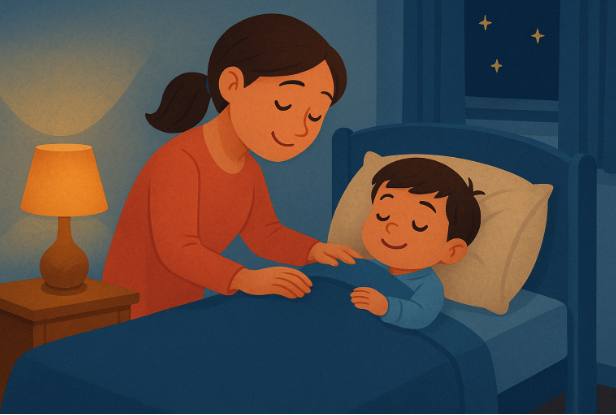
Children mimic their parents’ sleep habits. A 2013 study found that children whose parents had poor sleep hygiene were significantly more likely to have irregular sleep patterns (Jiang et al., 2013). Modeling healthy wind-down routines and device-free evenings reinforces positive behaviors.
Conclusion
Healthy sleep habits in childhood aren’t just about bedtime—they’re about routines, environments, and the behaviors that support rest. With consistency and a supportive approach, parents can help children build lifelong habits that support emotional, mental, and physical wellness.
References
- Mindell, J. A., Leichman, E. S., DuMond, C., & Sadeh, A. (2015). Sleep hygiene and sleep onset latency in children. https://pubmed.ncbi.nlm.nih.gov/26181485/
- CDC. (2022). Healthy Sleep for Kids. https://www.cdc.gov/sleep/features/healthy-sleep-for-kids.html
- National Sleep Foundation. (2021). Sleep Environment Recommendations. https://www.sleepfoundation.org/children-and-sleep
- Blunden, S., & Galland, B. (2014). The environment and children’s sleep. https://pubmed.ncbi.nlm.nih.gov/24749097/
- AAP. (2022). Media Use and Sleep in Children.
- Carter, B., Rees, P., Hale, L., Bhattacharjee, D., & Paradkar, M. (2016). Association between portable screen-based media device access or use and sleep outcomes. https://pubmed.ncbi.nlm.nih.gov/26768315/
- CDC. (2022). Physical Activity Guidelines for Children. https://www.cdc.gov/physicalactivity/basics/children/index.htm
- Sleep Health Foundation. (2020). Food and Sleep. https://www.sleephealthfoundation.org.au/food-and-sleep.html
- Mindell, J. A., & Williamson, A. A. (2018). Benefits of bedtime routines. https://pubmed.ncbi.nlm.nih.gov/29506461/
- Jiang, F., et al. (2013). Parental influence on children’s sleep patterns. https://pubmed.ncbi.nlm.nih.gov/23378833/