Balancing Work and Parenting Without Guilt
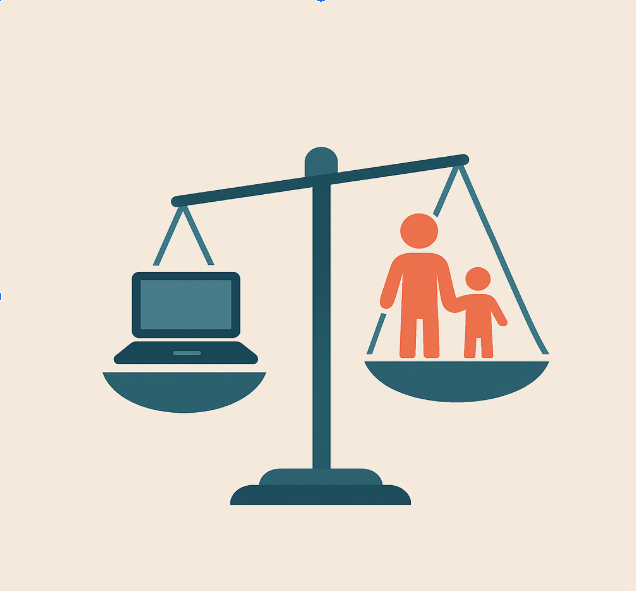
Balancing a career and parenting has become one of the most emotionally complex challenges of modern life. With increasing workplace demands and growing expectations around “good parenting,” many mothers and fathers feel stretched thin. The result is often guilt, burnout, and the sense of falling short in both roles.
The reality is that work–life balance does not mean perfection. It means intention. By redefining priorities, setting boundaries, and releasing unrealistic expectations, working parents can build a healthier and more sustainable balance.
The Weight of Parental Guilt
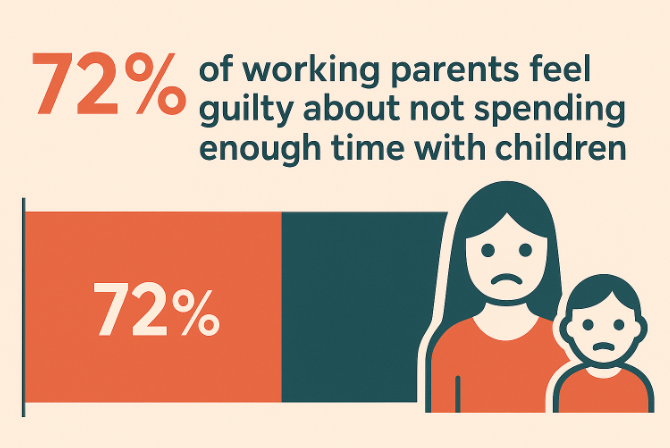
Parental guilt is widespread. A 2022 survey by Bright Horizons found that 72% of working parents feel guilty about not spending enough time with their children. This guilt often stems from internalized beliefs that parenting must always come before professional responsibilities.
Social media amplifies these feelings. Idealized images of parenting can make even devoted parents feel inadequate, particularly mothers, who are often expected to manage both career and caregiving responsibilities simultaneously.
Understanding the Impact of Guilt
Chronic guilt affects more than emotions. Research published in the Journal of Child and Family Studies links persistent parental guilt to higher stress levels, reduced self-compassion, and strained parent–child relationships.
Over time, guilt can diminish joy. Instead of recognizing meaningful moments, parents focus on perceived shortcomings, creating a cycle of emotional exhaustion.
Strategy #1: Redefine Balance
Balance is not about equal time—it is about intentional time. According to Harvard Business Review, being fully present in each role improves satisfaction both at work and at home. Emotional availability often matters more than the number of hours spent together.
Children benefit most when parents are engaged and attentive, even during limited shared moments.
Strategy #2: Set Clear Boundaries
Clear boundaries protect mental health. Studies by the American Psychological Association show that parents who establish work–life boundaries report lower stress and stronger family relationships. Simple actions such as disabling work notifications during family time can create meaningful separation between roles.
Making time for rest and self-care is not selfish—it is essential for long-term well-being.
Strategy #3: Normalize Asking for Help
The belief that “good parents do it all” is harmful. Research in the Journal of Family Psychology shows that strong social support networks significantly reduce parental burnout.
Whether through co-parenting, extended family, or community support, sharing responsibilities strengthens both parents and children.
Strategy #4: Be Honest with Employers
Workplace flexibility plays a critical role in parental well-being. A 2023 FlexJobs survey reported that 80% of working parents felt more effective when flexible schedules were available.
Employers that support family-friendly policies often see increased morale, productivity, and retention.
Strategy #5: Accept Imperfection
One of the most freeing realizations in parenting is that perfection is not required. Psychologist Kristin Neff emphasizes that self-compassion builds emotional resilience and helps parents model healthy coping skills.
Mistakes do not weaken parent–child bonds. Apologizing, reflecting, and reconnecting often strengthen trust and emotional security.
Strategy #6: Make the Most of the Time You Have
When time is limited, quality matters more than quantity. Research from the Child Mind Institute shows that even brief, focused interactions can significantly support a child’s emotional development.
Meaningful connection does not require constant presence—only intentional engagement.
The Long-Term Perspective
Research from Yale University indicates that children of working parents often develop greater independence, empathy, and adaptability when raised in supportive and structured environments.

When children observe parents setting boundaries, managing responsibilities, and practicing self-respect, they internalize these life skills.
Let Go of Guilt, Embrace Growth
Balancing work and parenting is an ongoing process. What matters most is intentional decision-making rooted in care, flexibility, and self-respect.
Guilt may appear from time to time, but it does not define parenthood. With evidence-based strategies and realistic expectations, working parents can build a fulfilling and sustainable family life.
References
- American Psychological Association. (2019). Managing Work and Family Stress.
- American Psychological Association. (2020). The Impact of Social Media on Parental Guilt.
- Bright Horizons. (2022). Modern Family Index: Working Parent Guilt Survey.
- Child Mind Institute. (2021). The Importance of Quality Time with Kids.
- FlexJobs. (2023). Working Parents & Flexible Work Survey.
- Germain, E. et al. (2022). Social Support and Parental Burnout. Journal of Family Psychology.
- Harvard Business Review. (2022). Stop Trying to Balance It All.
- Nelson, S. et al. (2021). Self-Compassion and Guilt in Parenting. Journal of Child and Family Studies.
- Neff, K. (2020). Self-Compassion for Parents.
- Society for Human Resource Management. (2022). The Future of Work and Family-Friendly Policies.
- Yale University Child Study Center. (2019). How Working Parents Shape Child Development.